Grow Cyclamen for a burst of vibrant, long-lasting color and elegance in your garden, brightening even the gloomiest of days
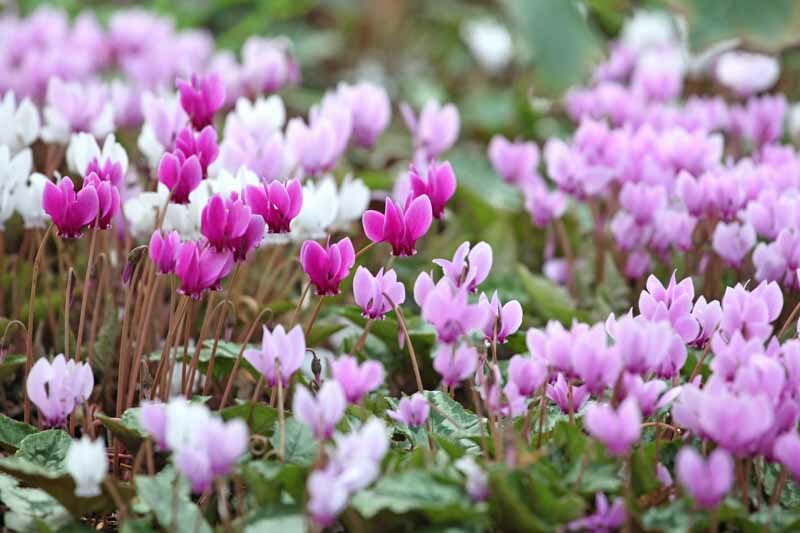


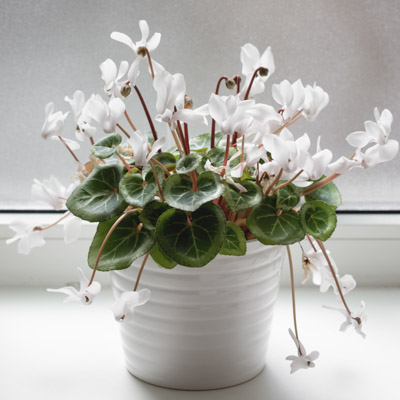
Cyclamen is one of the finest plants for cool-season color. It combines elegant upswept flowers with beautifully patterned foliage and brings interest at times of year when many other plants are quiet. In gardens, hardy cyclamen can brighten woodland edges, shady borders, rock gardens, and the ground beneath deciduous trees. Indoors, florist cyclamen adds long-lasting color to bright, cool rooms through fall and winter.
Although cyclamen looks delicate, it is not inherently difficult. Most failures come from treating it like the wrong kind of plant. Cyclamen is not a heat-loving tropical, not a marsh plant, and not a summer-blooming perennial. It is a tuberous plant adapted to a Mediterranean-type rhythm: active growth in the cooler part of the year, then rest when heat and dryness arrive.
Once you understand that pattern, cyclamen care becomes much easier. The most important rule is simple: match the species or type to the setting, give it excellent drainage, and respect its natural cycle of growth, flowering, and dormancy. Florist cyclamen, usually derived from Cyclamen persicum, is generally grown indoors in bright, cool conditions. Hardy garden species such as Cyclamen hederifolium and Cyclamen coum are excellent outdoor plants for well-drained shade.
This guide explains what cyclamen is, which kinds gardeners grow most often, when it blooms, how to plant it, how to care for it indoors and outdoors, how to handle dormancy, how to propagate it, and how to solve the problems that cause the most confusion.
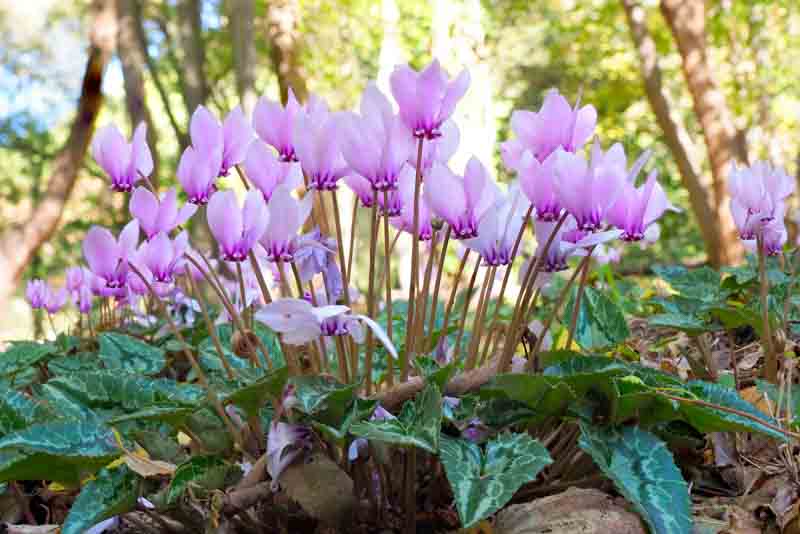
Use: Excellent for woodland gardens, shady borders, rock gardens, containers, patios, and cool indoor displays.
Highlight: Cyclamen combines reflexed flowers with ornamental marbled foliage at seasons when much of the garden is quiet.
Design note: Plant in drifts or repeated groups so the flowers and foliage read as a deliberate layer rather than scattered accents.
| Botanical Name | Cyclamen |
|---|---|
| Family | Primrose family (Primulaceae) |
| Common Names | Cyclamen, Persian violet, sowbread |
| Native Range |
Native context: The genus is native from Europe through the Mediterranean region and western Asia to Iran, with one outlying species in northeastern Somalia. Typical habitats: Woodland margins, rocky ground, scrub, and sites that are moist in the cool season and drier in summer. |
| Plant Type and Habit | Tuberous perennial with a compact, low-growing habit |
| Hardiness (approx. USDA) | Hardiness varies by species. For example, many hardy garden species are grown in USDA Zones 5-9, while florist cyclamen is generally treated as a tender houseplant or mild-winter container plant. |
| Height | 6-10 in. (15-25 cm) for florist types; many hardy species are smaller |
| Spread | 6-12 in. (15-30 cm), expanding gradually over time depending on species and age |
| Sun and Exposure | Best in partial shade outdoors or bright indirect light indoors |
| Soil | Fertile, humus-rich, well-drained soil; avoid wet, stagnant soil around the tuber |
| Seasonal Interest | Late summer, fall, winter, or early spring, depending on species |
| Flower Color | White, pink, rose, magenta, red, and purple tones |
| Foliage Color | Green with silver marbling, veining, or patterning |
| Wildlife Value | Primarily grown as an ornamental; in suitable garden settings the flowers may be visited by small pollinating insects |
| Deer / Rabbit | Browsing pressure varies by site; cyclamen is sometimes less heavily browsed than softer ornamentals, but no plant is completely browse-proof |
| Toxicity | Cyclamen is toxic if ingested, and the tuber is the most hazardous part; keep away from pets and children |
| Invasive Status | Not generally considered invasive; some species may naturalize gently in favorable sites |
Can you plant cyclamen outside? Yes – hardy species such as Cyclamen hederifolium and Cyclamen coum are excellent outdoor plants in well-drained, shaded gardens.
Care for cyclamen indoors? Give florist cyclamen bright indirect light, cool temperatures, careful watering, and fast drainage.
Cyclamen indoor or outdoor? Both – Cyclamen persicum is commonly grown indoors, while hardy species are excellent outdoors.
When do cyclamen bloom? Depending on the species, cyclamen blooms in late summer, fall, winter, or early spring.
Cyclamen life cycle? Active growth in the cool season, flowering, seed set, then summer dormancy.
Cyclamen leaves turning yellow? Most often caused by overwatering, heat stress, or normal dormancy starting.
Cyclamen bulbs? The common term is “bulbs,” but botanically cyclamen grows from a tuber.
How to propagate cyclamen? Usually from seed; tuber division is possible only in limited cases and is much less dependable.
Cyclamen temperature range? Best performance is usually in cool conditions. Florist cyclamen often flowers longest at about 50-59°F (10-15°C) and generally grows best in a broader cool range of about 50-68°F (10-20°C).
What makes cyclamen valuable? Long seasonal color, decorative foliage, shade-garden value, container versatility, and cool-season elegance.
| Hardiness |
4 - 11 |
|---|---|
| Plant Type | Bulbs, Perennials |
| Plant Family | Primulaceae |
| Genus | Cyclamen |
| Exposure | Partial Sun |
| Season of Interest | Spring (Early), Fall, Winter |
| Height | 2" - 10" (5cm - 25cm) |
| Spread | 6" - 1' (15cm - 30cm) |
| Maintenance | Low |
| Water Needs | Average |
| Soil Type | Chalk, Clay, Loam, Sand |
| Soil pH | Acid, Neutral, Alkaline |
| Soil Drainage | Well-Drained |
| Characteristics | Showy |
| Tolerance | Deer, Rabbit |
| Landscaping Ideas | Beds And Borders, Patio And Containers |
| Garden Styles | City and Courtyard, Gravel and Rock Garden, Informal and Cottage |
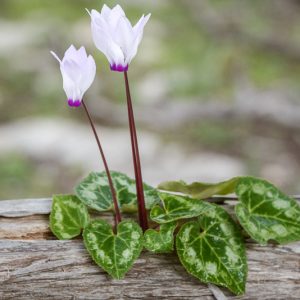
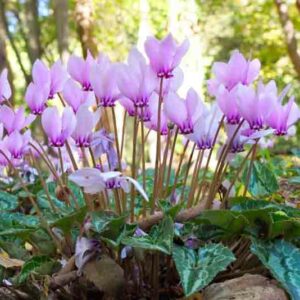
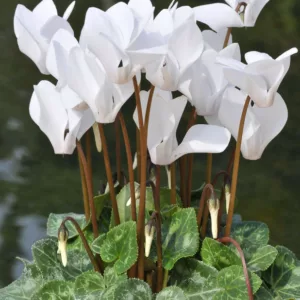
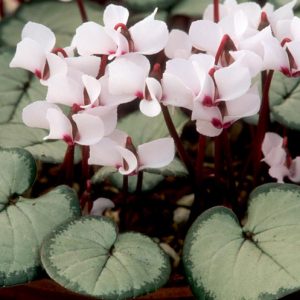
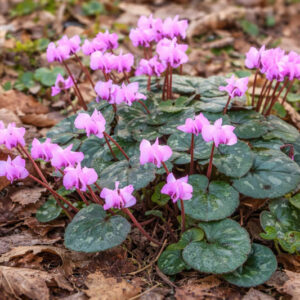
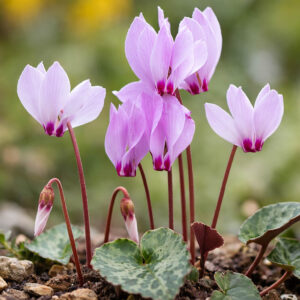
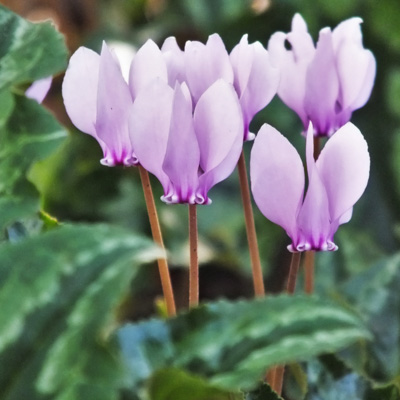
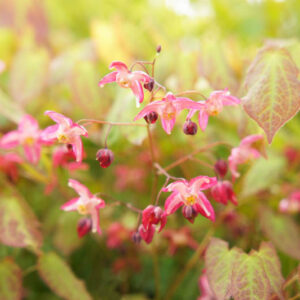
This genus includes tuberous perennial plants grown for distinctive flowers and ornamental foliage. The flowers rise above the leaves on individual stems, and the petals sweep backward, creating the elegant reflexed shape that makes the plant immediately recognizable. The leaves are often as decorative as the flowers, marked with silver marbling, veining, or central patterns.
Botanically, it belongs to the Primrose family, Primulaceae. It is related to primroses, but it differs from them in habit and seasonal rhythm. It grows from a tuber rather than a fibrous root system, and that tuber stores energy that helps the plant survive periods of seasonal rest.
This adaptation explains why it behaves differently from many other ornamentals. Most kinds are adapted to cool, moist conditions during growth and flowering, followed by a drier resting period when temperatures rise. That is why it is especially useful for fall, winter, and early spring display.
The best advice starts with the right identification. This is not one uniform garden subject. Some kinds are best as indoor flowering plants, while others are hardy outdoor species suited to shaded gardens.
| Species or Type | Bloom Time | Best Use | Hardiness |
|---|---|---|---|
| Cyclamen persicum and florist hybrids | Fall-Winter | Indoor display, cool containers | Tender |
| Cyclamen hederifolium | Late Summer-Fall | Woodland gardens, underplanting | Hardy |
| Cyclamen coum | Winter-Early Spring | Shaded borders, drifts, rock gardens | Hardy |
Florist forms usually means cultivated forms of Cyclamen persicum, grown mainly as houseplants or cool-season container plants. Hardy species refers to garden forms better adapted to outdoor life in shaded, free-draining soil. Confusing those groups is one of the main reasons people get poor care advice.
Because it belongs to the same family as primroses, it is sometimes treated as if it behaves like a typical primrose. That relationship is real botanically, but horticulturally the differences are important.
| Feature | This plant | Primrose |
|---|---|---|
| Growth structure | Tuberous perennial | Fibrous-rooted perennial |
| Flower form | Reflexed petals | Open, flatter flowers |
| Seasonal rhythm | Cool-season growth, often summer dormancy | Mostly spring growth and bloom |
| Leaf character | Often silver-patterned | Usually plain green rosettes |
This distinction affects watering, seasonal expectations, and how you interpret yellowing leaves or summer dieback. It is not simply “another primrose.”
This is a cool-season bloomer, but the exact flowering period depends on the species. Cyclamen hederifolium is especially valuable for late summer and autumn interest. Cyclamen coum extends the display into winter and early spring. Cyclamen persicum is commonly sold in bloom through fall and winter and is a classic indoor flowering plant for the cooler months.
This makes it especially useful for filling seasonal gaps in the garden and the home, alongside fall flowers and in cool-season displays with Christmas flowers and plants.
If there is one non-negotiable in care, it is drainage. In nature, many species grow in rocky or woodland soils that hold moisture during the growing season but drain freely around the tuber. The same principle should guide cultivation.
The ideal soil is humus-rich, open-textured, and sharply drained. It should retain enough moisture to support active growth, but it should never stay heavy, airless, or waterlogged. In the garden, dense clay benefits from added organic matter, leaf mold, grit, or other amendments that improve structure. In containers, use a light, airy potting mix rather than one that remains wet for long periods.
Excess moisture around the tuber is one of the quickest ways to lose it. That is why careful watering matters so much, and why many gardeners prefer to water indoor plants from below or around the edge of the pot rather than directly onto the crown.
The life cycle explains most of its quirks and most of the gardener’s questions. Once you understand the sequence, the plant is much easier to interpret.
This cycle is not a weakness. It is the plant’s normal strategy for surviving seasonal heat and dryness.
The honest answer is both – but usually not the same kind of cyclamen in each setting. Florist cyclamen, typically based on Cyclamen persicum, is most often grown indoors in bright, cool rooms. Hardy species such as Cyclamen hederifolium and Cyclamen coum are excellent outdoor garden plants.
Outdoors, cyclamen shines beneath trees, among open-rooted shrubs, and in woodland-style drifts. Indoors, it performs best in bright rooms away from radiators, heating vents, fireplaces, and hot south-facing glass.
|
|
|
Hardy cyclamen is usually planted in late summer or fall so the tubers can establish as growth begins. Choose a site with shade or partial shade, humus-rich soil, and excellent drainage. These are woodland plants, not subjects for exposed hot borders or waterlogged ground.
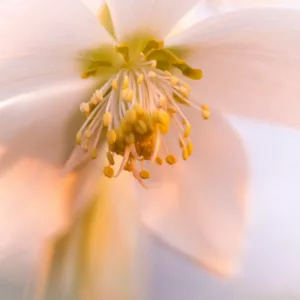
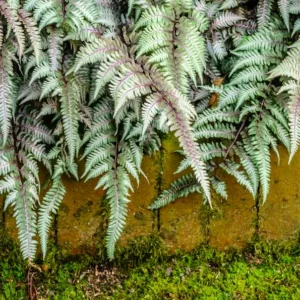
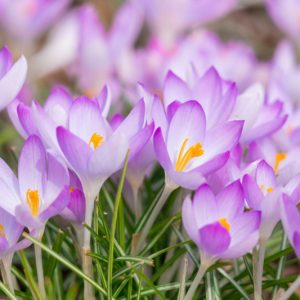
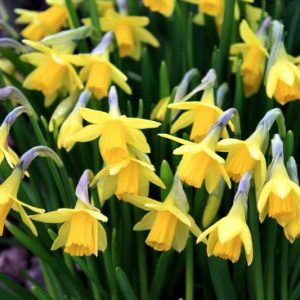
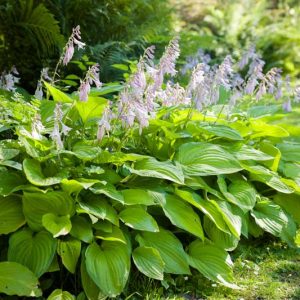
It combines naturally with ferns, hostas, and hellebores, and it also threads well among spring companions such as daffodils and tulips.
Plant tubers shallowly rather than deeply. In many hardy species, the upper surface sits only a little below the soil line. Avoid burying the tuber so deeply that flowering is reduced or moisture is trapped around it. Water lightly after planting to settle the soil, then avoid saturation.
Indoor cyclamen care is mostly about restraint. The plant wants bright indirect light, cool air, and careful watering. It does not want tropical heat, stagnant warm air, or constantly wet compost.
When flowering ends and the plant begins to yellow, reduce watering gradually and allow it to move into dormancy instead of trying to force continuous growth.
The most dependable way to propagate cyclamen is by seed. After flowering, the plant can produce seed pods that mature over time. Fresh seed sown into a free-draining medium is the standard way to increase stock.
For florist cyclamen and hardy species alike, seed is the usual method. Tuber cutting or division is much less dependable because wounds can invite rot. It may be discussed occasionally, but it is not the normal recommendation for most gardeners.
After flowering, florist cyclamen often begins to slow down. Leaves may yellow, stems weaken, and the plant can look as though it is collapsing. In many cases, this is not failure – it is dormancy beginning.
To manage dormancy well:
Many indoor cyclamen are lost because dormant tubers are treated like actively growing plants. During rest, the tuber needs much less moisture. When new growth resumes, usually as conditions cool, watering can begin again and the plant can be returned to brighter display conditions.
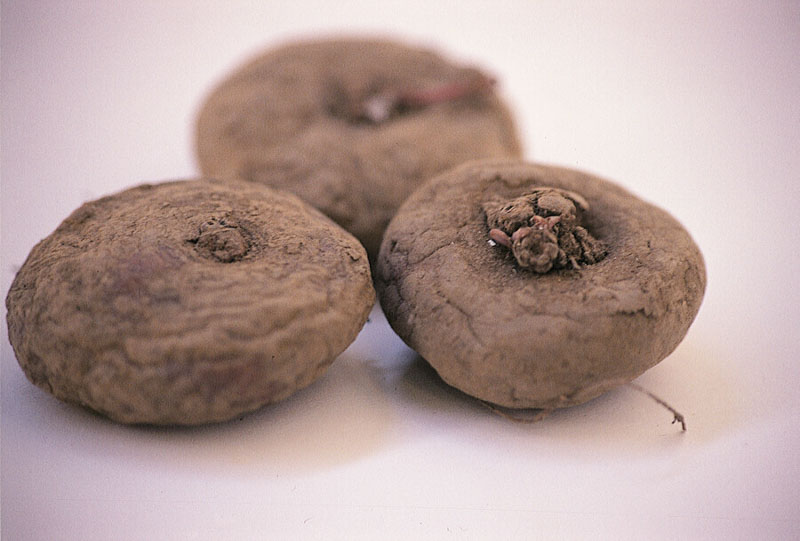
Cyclamen tubers
Cyclamen is valued mainly for ornamental beauty rather than for major wildlife performance, but in suitable climates and open garden settings the flowers may be visited by small pollinating insects when relatively few other plants are blooming. That can make cyclamen a useful part of cool-season planting.
Browsing pressure also varies by site. Cyclamen is sometimes less heavily eaten than softer ornamentals, but no plant should be described as completely deer-proof or rabbit-proof in every garden.
Cyclamen is one of the best plants for bringing refinement to shaded planting. The flowers rise above the foliage rather than sitting flat against it, which gives a planting a sense of lightness. The leaves add another layer of interest even when flowers are absent.
Use cyclamen in:
For containers, cyclamen combines well with trailing ivy, seasonal grasses, evergreen accents, and other cool-season plants. In the ground, it usually looks best as a repeating layer or colony rather than as isolated single specimens.
| Companion Plant | Season | Design Benefit |
|---|---|---|
| Hellebores | Winter | Companion cool-season flowers |
| Ferns | Spring-Summer | Textural contrast, woodland atmosphere |
| Hostas | Summer | Broad foliage backdrop after cyclamen fades |
| Daffodils | Spring | Seasonal succession and bulb layering |
| Tulips | Spring | Layered mixed bulb displays |
| Season | Main Tasks |
|---|---|
| Autumn | Plant hardy tubers, restart growth, enjoy early bloomers |
| Winter | Peak bloom for many cyclamen, maintain cool indoor conditions |
| Spring | Watch for seed development and gradual seasonal transition |
| Summer | Dormancy period for many forms; reduce watering and do not force active growth |
| Problem | Likely Cause | Best Fix |
|---|---|---|
| Yellow leaves | Heat, overwatering, or dormancy | Move to cooler conditions and review watering |
| Wilting | Wet roots, drought stress, or hot air | Check soil moisture, drainage, and temperature promptly |
| Poor flowering | Too warm, too dark, or overfed | Give brighter light, cooler air, and lighter feeding |
Cyclamen can be affected by pests such as cyclamen mites, aphids, mealybugs, thrips, slugs, and snails. Common disease problems include Botrytis blight, bacterial soft rot, Fusarium wilt, root rot, and leaf spot.
The best prevention is usually environmental rather than chemical. Good air circulation, cool conditions, careful watering, and fast drainage prevent more cyclamen problems than treatments do. Where insect pressure develops, measures such as neem oil may be used appropriately as part of a broader management approach.
Cyclamen offers an unusual combination of strengths in one compact plant. It provides flowers when little else is blooming, attractive foliage when flowers are absent, excellent performance in shade, versatility in containers, and distinct cool-season elegance.
The species distinctions, native-range wording, bloom timing, planting depth caution, seed propagation emphasis, dormancy handling, and toxicity wording above are aligned with those references.
Updated: March 2026 • Reviewed by Gardenia Editors
Cyclamen is a genus of tuberous perennial plants grown for cool-season flowers and ornamental, often silver-patterned foliage.
Yes. Hardy cyclamen species can be planted outside in partial shade and well-drained soil.
Both. Florist cyclamen is usually grown indoors, while hardy species are excellent outdoor garden plants.
Yes. Cyclamen are perennial plants that return from a tuber each growing season.
Cyclamen usually blooms in late summer, fall, winter, or early spring, depending on the species.
Cyclamen grows in the cool season, flowers, may set seed, then enters a resting period that is often in summer.
Keep it in bright indirect light, cool temperatures, and lightly moist but never soggy compost while it is actively growing.
Cyclamen performs best in cool conditions, generally around 50-68°F (10-20°C), with florist cyclamen often flowering longest at the cooler end of that range.
Yellow leaves are usually caused by overwatering, heat stress, or the start of normal dormancy.
Cyclamen wilts most often from wet roots, dry soil, or excessive heat.
They are tubers. “Cyclamen bulbs” is a common term, but botanically the plant grows from a tuber.
Cyclamen is most commonly propagated from seed. Tuber division may be attempted in limited cases, but it is much riskier and less dependable.
Cyclamen provides cool-season color, attractive foliage, shade-garden value, and strong container performance.
Cyclamen is often associated in floriography with sincerity, tenderness, empathy, and lasting affection.
Reduce watering, allow the plant to enter dormancy naturally, and resume regular care when new growth returns.

| Hardiness |
4 - 11 |
|---|---|
| Plant Type | Bulbs, Perennials |
| Plant Family | Primulaceae |
| Genus | Cyclamen |
| Exposure | Partial Sun |
| Season of Interest | Spring (Early), Fall, Winter |
| Height | 2" - 10" (5cm - 25cm) |
| Spread | 6" - 1' (15cm - 30cm) |
| Maintenance | Low |
| Water Needs | Average |
| Soil Type | Chalk, Clay, Loam, Sand |
| Soil pH | Acid, Neutral, Alkaline |
| Soil Drainage | Well-Drained |
| Characteristics | Showy |
| Tolerance | Deer, Rabbit |
| Landscaping Ideas | Beds And Borders, Patio And Containers |
| Garden Styles | City and Courtyard, Gravel and Rock Garden, Informal and Cottage |
Create a membership account to save your garden designs and to view them on any device.
Becoming a contributing member of Gardenia is easy and can be done in just a few minutes. If you provide us with your name, email address and the payment of a modest $25 annual membership fee, you will become a full member, enabling you to design and save up to 25 of your garden design ideas.
Join now and start creating your dream garden!
Create a membership account to save your garden designs and to view them on any device.
Becoming a contributing member of Gardenia is easy and can be done in just a few minutes. If you provide us with your name, email address and the payment of a modest $25 annual membership fee, you will become a full member, enabling you to design and save up to 25 of your garden design ideas.
Join now and start creating your dream garden!